25 Apr 2024
Understanding Foil Shapes: A Technical Guide Made Simple

Why Foil Shapes Matter
Just like aircraft wings, hydrofoils are designed with very specific purposes in mind. A stunt plane and a glider look very different because they are built to perform differently — the same is true with foils.
-
Short, stubby wings → quick response and manoeuvrability.
-
Long, thin wings → efficiency, glide, and stability.

Every foil sits somewhere between these extremes. The key is understanding how each design element affects performance.
Front Wings: The Heart of Your Foil
The front wing is the single biggest influence on your riding experience. Its size, shape, and profile control how quickly you take off, how fast you can go, and how agile your foil feels.
Key design elements:
- Size: Larger wings lift earlier and are more forgiving; smaller wings are faster and more agile but require higher take-off speed.
- Wingspan: Wider wings improve efficiency and glide, but reduce roll agility.
- Aspect Ratio: High aspect (long, thin) wings glide far and pump well; low aspect (shorter, wider) wings turn tighter.
- Chord: A longer chord increases surface area and the ability to generate early lift as well as increasing pitch stability. A shorter chord has less drag so is more efficient and faster.
- Thickness: Thicker foils generate more lift at low speed but create drag at high speed; thinner foils are faster but require skill to ride.
- Dihedral/Anhedral: Wing tips angled up (dihedral) improve roll stability; angled down (anhedral) improve carving but reduce stability.
- Profile: The cross-sectioanl shape of the wing that includes thickness but also the top and bottom shape in any area across the whole span of the foil. The shape on the underside of the foil is often referred to as camber but you need to take the whole profile into account and this is part of the foils secret sauce that can make a foil fast, early lifting, forgiving or effcient.

Key takeaway: The front wing defines your riding style — choose glide and efficiency for distance, or compact shapes for turning and tricks.
Stabilizers and Fuselages
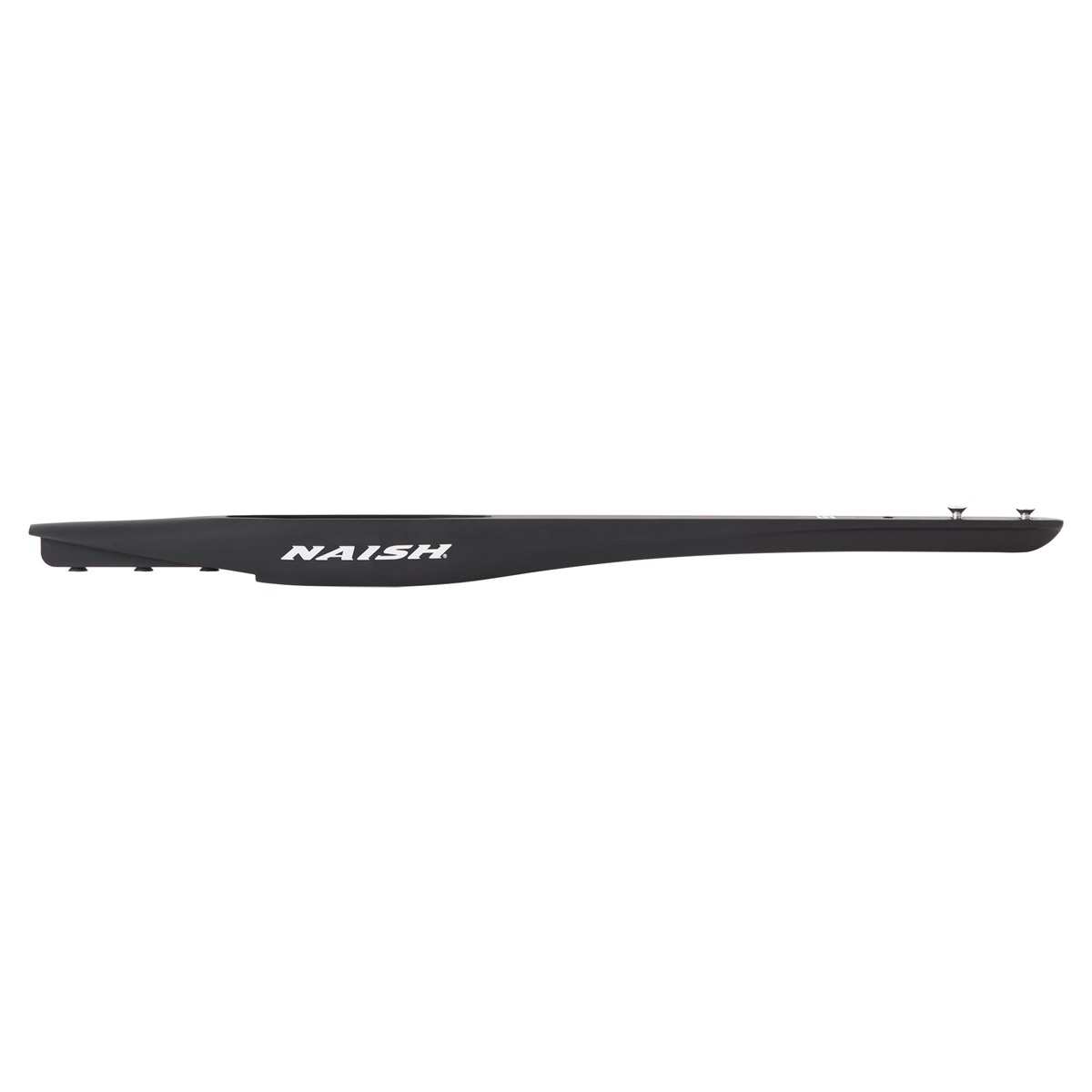
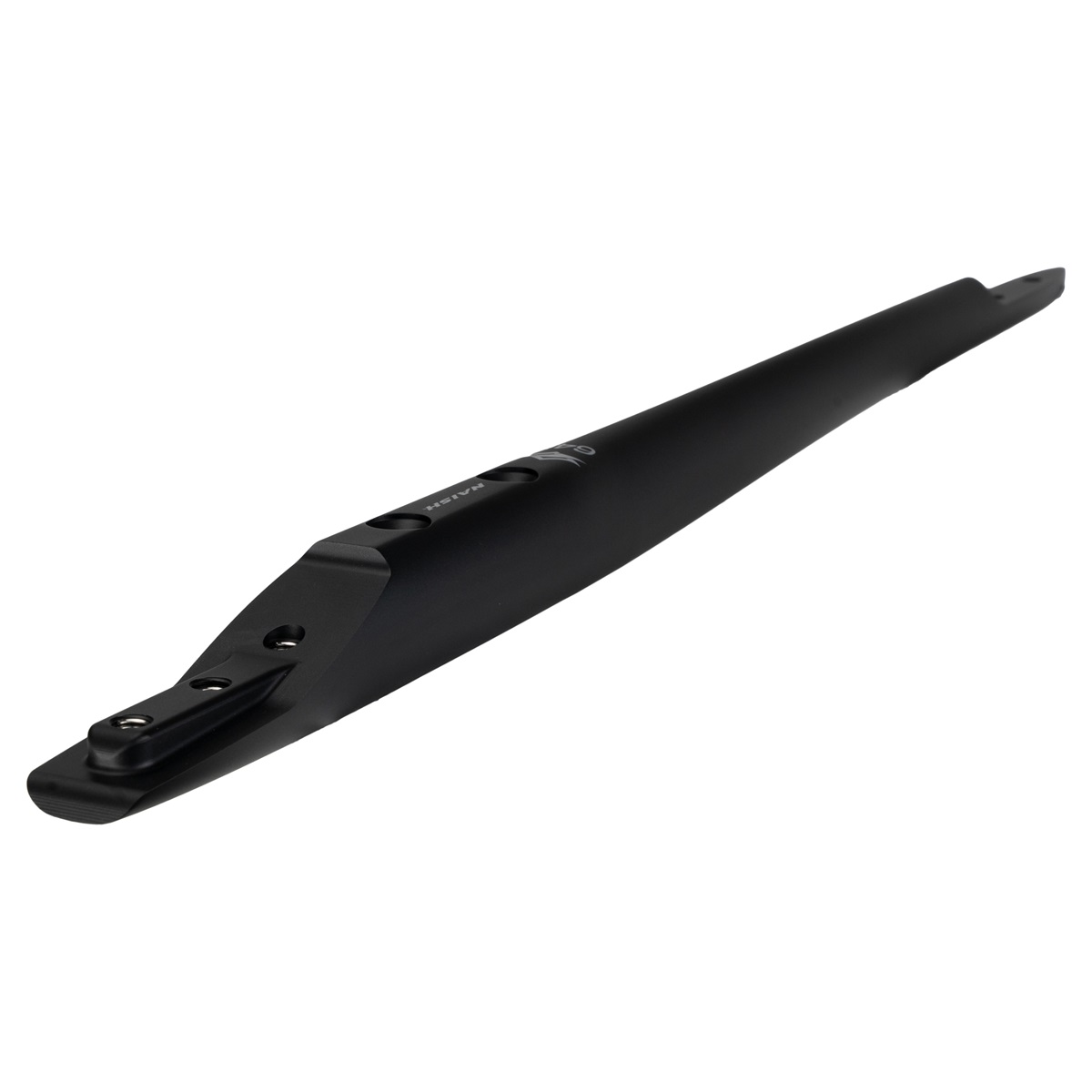
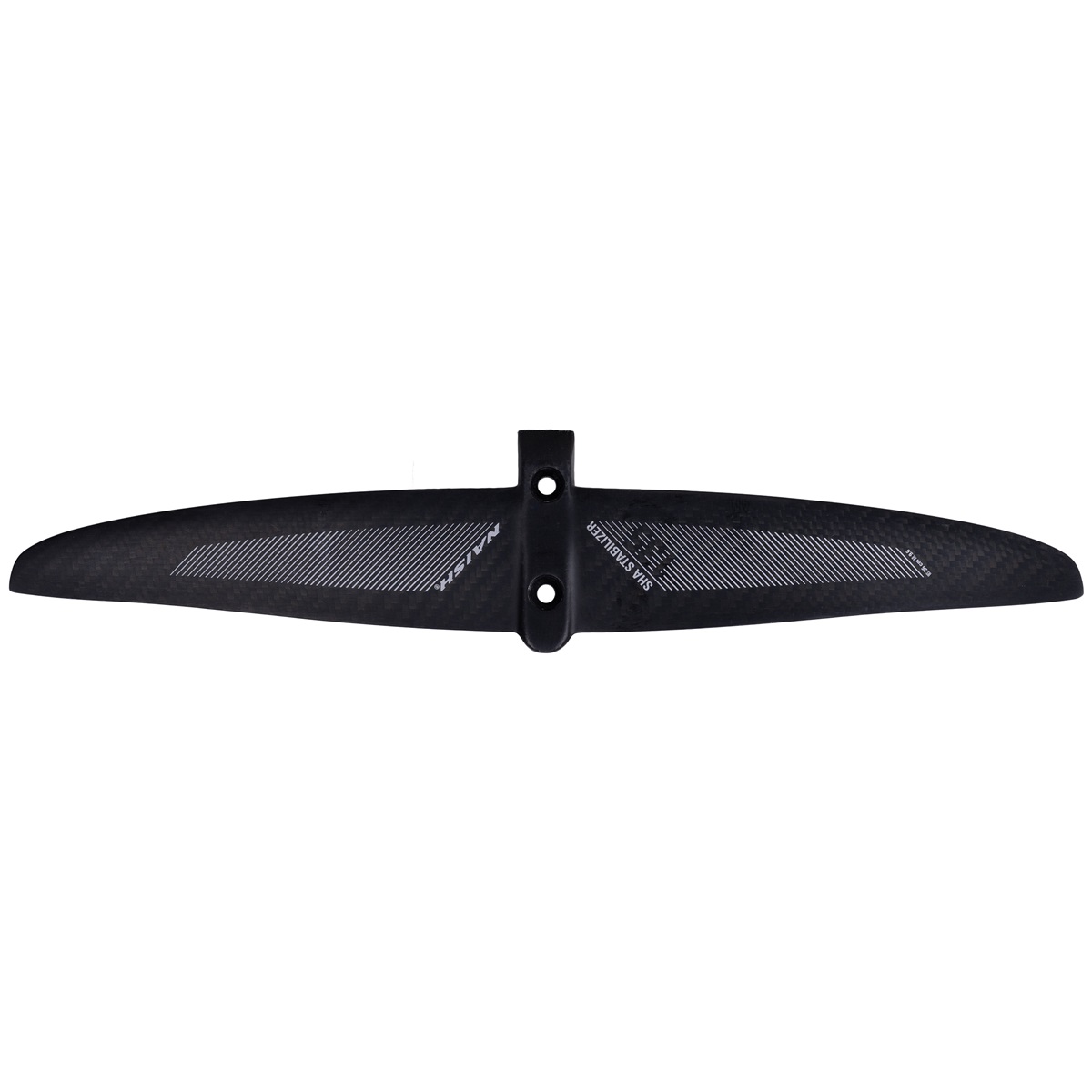
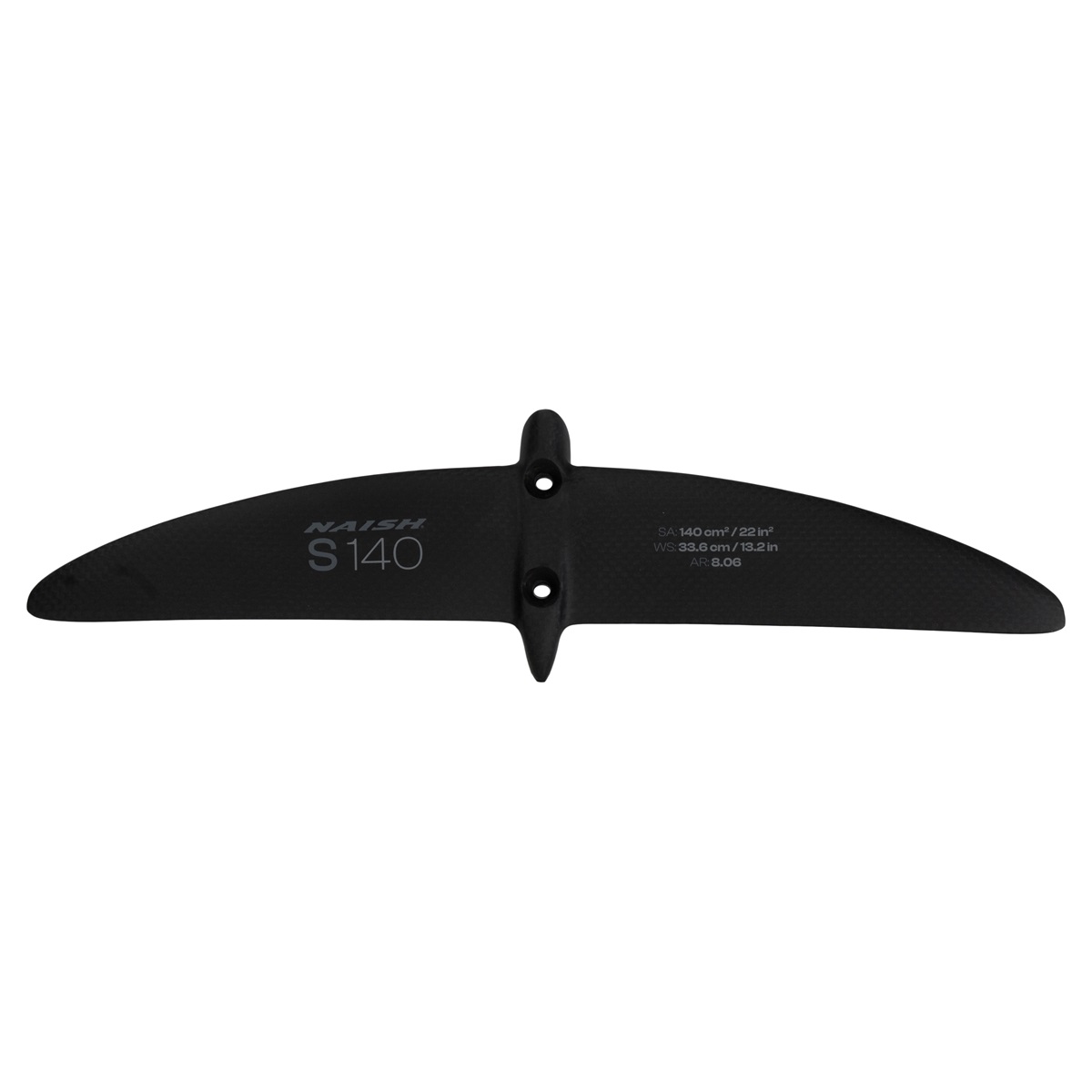
The stabilizer (rear wing) and fuselage work together to balance your foil. Small tweaks here can completely change how your setup feels.
-
Fuselage length: Longer fuselages = more pitch stability; shorter fuselages = tighter turns.
-
Stabilizer size/shape: Larger stabilizers increase control; smaller stabilizers increase speed and liveliness.
Key takeaway: Think of the stabilizer and fuselage as your fine-tuning tools — they won’t change your setup as dramatically as the front wing, but they unlock speed, manoeuvrability as well as honing in balance and comfort.
Mast Height and Material
The mast determines how much room you have to work with above the foil, as well as how stable your ride feels.
- Shorter masts (>70cm): Easier for beginners, great in shallow water but can breach more easily.
- Mid Length Masts (± 70 – 85cm): The most used size for recreational foiling. Enough height to clear chop and short enough to give control.
- Longer masts (<85cm): Better for speed whether racing or going down large waves. There is more room between foil breaching and board hitting the water.
Alloy vs Carbon: Alloy is cost-effective but can flex; carbon is lighter and stiffer, especially high-modulus carbon, which improves responsiveness but comes at a premium.
Key takeaway: Start shorter for learning, then size up for performance. Material choice is usually dictated by budget versus performance needs.
Matching Foils to Conditions and Disciplines
Every rider has different goals, and every sport has different demands. Racing, wave riding, freeride cruising, pumping, or freestyle — each requires a different balance of lift, speed, and agility.
-
Bigger foils = early lift, slower speeds, great for learning or small waves, light winds.
-
Smaller foils = speed, agility, and control in bigger/windier conditions.
-
Mid-aspect foils = balance of glide, pumpability, and turning, making them versatile across many disciplines.
Key takeaway: Be realistic about your conditions and style. The “perfect” foil doesn’t exist — you’ll often compromise between glide, turning, and control.
Progression and Upgrading
Most riders start on bigger, more forgiving foils and then move toward smaller, higher-performance setups as their skills improve. The good news is you don’t always need to buy a full new foil. Most systems allow you to upgrade individual components like front wings, stabilizers, or fuselages.
-
Start with front wing changes — they make the biggest impact.
-
Upgrade stabilizers and fuselages later to fine-tune performance.
-
Switch to carbon masts once you want maximum stiffness and responsiveness.
If you are looking to start a new foiling discipline then you should be able to use your current set up. Although it is always easier to learn a new skill on a slower more stable foil so sizing up in front wing size will may steepen the learning curve.
Key takeaway: Upgrade in stages — changing one component at a time helps you adapt and saves money.
Final Thoughts
Understanding foil shapes is about recognising trade-offs. The more efficient a foil is at gliding, the less agile it will be in turns. The more stable it is at speed, the less lively it will feel. No single foil does everything perfectly — which is why many advanced riders build a small quiver to suit different conditions.
By learning how each element — front wings, stabilizers, fuselages, and masts — changes performance, you’ll be able to fine-tune your setup, progress faster, and make the most of every session.
Content created by King of Watersports KOW Copyright