Downwind Foiling 101 – Paddle, Wing, Prone & Parawing

The Downwind Boom
If 2024 was the year downwind foiling broke into the mainstream, 2025 is when it truly takes off. Riders are going further, faster and lighter — chasing ocean swells miles from shore and discovering what feels like a whole new sport. Whether you’re winging, paddling, prone foiling or now experimenting with the new parawing setups, downwinding is all about one thing: pure glide.
What started as an offshoot of SUP foiling has evolved into one of the most addictive forms of riding. You’re no longer tied to your local break or the strongest wind forecast — you’re reading the ocean, linking energy, and flying across rolling swell with a feeling that’s closer to backcountry skiing/snowboarding than traditional watersports.
Why Downwinding Is So Addictive
Ask anyone who’s tried it — that first moment you connect two bumps and feel the foil accelerate beneath you is unforgettable. It’s a mix of freedom, flow and ocean awareness that’s hard to replicate. Like earning your turns in the mountains, you’ve got to “earn your glides” here too. The effort of paddling, winging, or setting up logistics fades the moment you lock into the rhythm of the swell and realise how far you’ve come.
Different Ways to Downwind
Wingfoiling – The Gateway to Glide
For most riders, wingfoiling is the entry point. It’s the easiest way to experience long downwind runs without worrying too much about logistics — you can ride upwind, flag out the wing, and surf your way back. You can even use it as a training tool before moving into paddle or prone downwinding.
Modern long, narrow “downwind” wing boards make it even easier. They accelerate quicker in light wind, helping you build board speed and take off with less effort. Practice paddling into waves to help get your sup foiling skills dialled in.
Pro tip: keep your first runs short and aim for moderate conditions — big swell or strong wind makes it harder, not easier.

SUP Downwinding – The Pure Paddler’s Choice
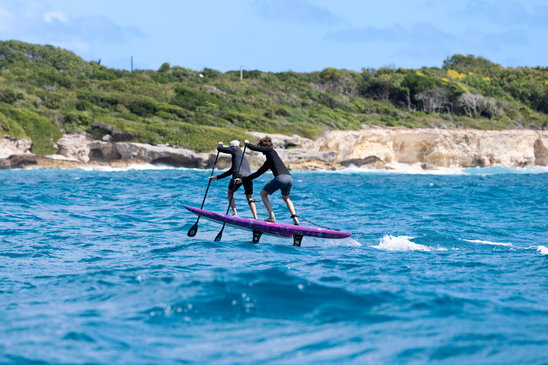
SUP downwinding is as close to the purest form of ocean glide as it gets. No sail, no wing — just you, a board, a paddle and the swell. It’s a physical challenge, sure, but incredibly rewarding.
Modern downwind SUP boards are 6–8ft long and 19–21 inches wide. The longer and thinner they are, the more efficiently they move through the water, helping you reach foiling speed faster. Once up, the goal is to connect bump after bump, using paddle strokes and foil glide to keep flying.
It takes time and practice, but once you get it right, it’s magic.
Prone Downwinding – The Minimalist Approach
For those who already prone foil in waves, downwinding prone is the next step. The boards are getting longer and slimmer, helping you paddle into rolling ocean swells that don’t even break.
Prone downwinding is challenging but rewarding — it teaches precision, fitness and awareness. You’ll be linking swells and pumping back out to sea, using every ounce of efficiency your foil has to offer. Think of it as the high-performance, stripped-back version of downwind foiling.
Dockstart Downwinding rivals prone with the minimal kit as the boards can be almost half the size. Not recommended for anything offshore without a boat/jetski but the abilty to launch off a rock, dock, groin or ladder on a pump foil setup means you can ride small swell on big foils out an away from your original start point.
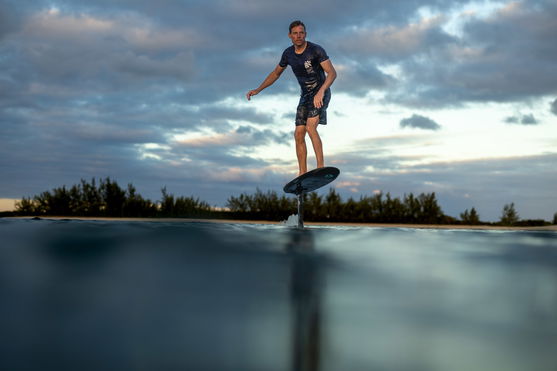
Parawing Foiling – The Future Arrives
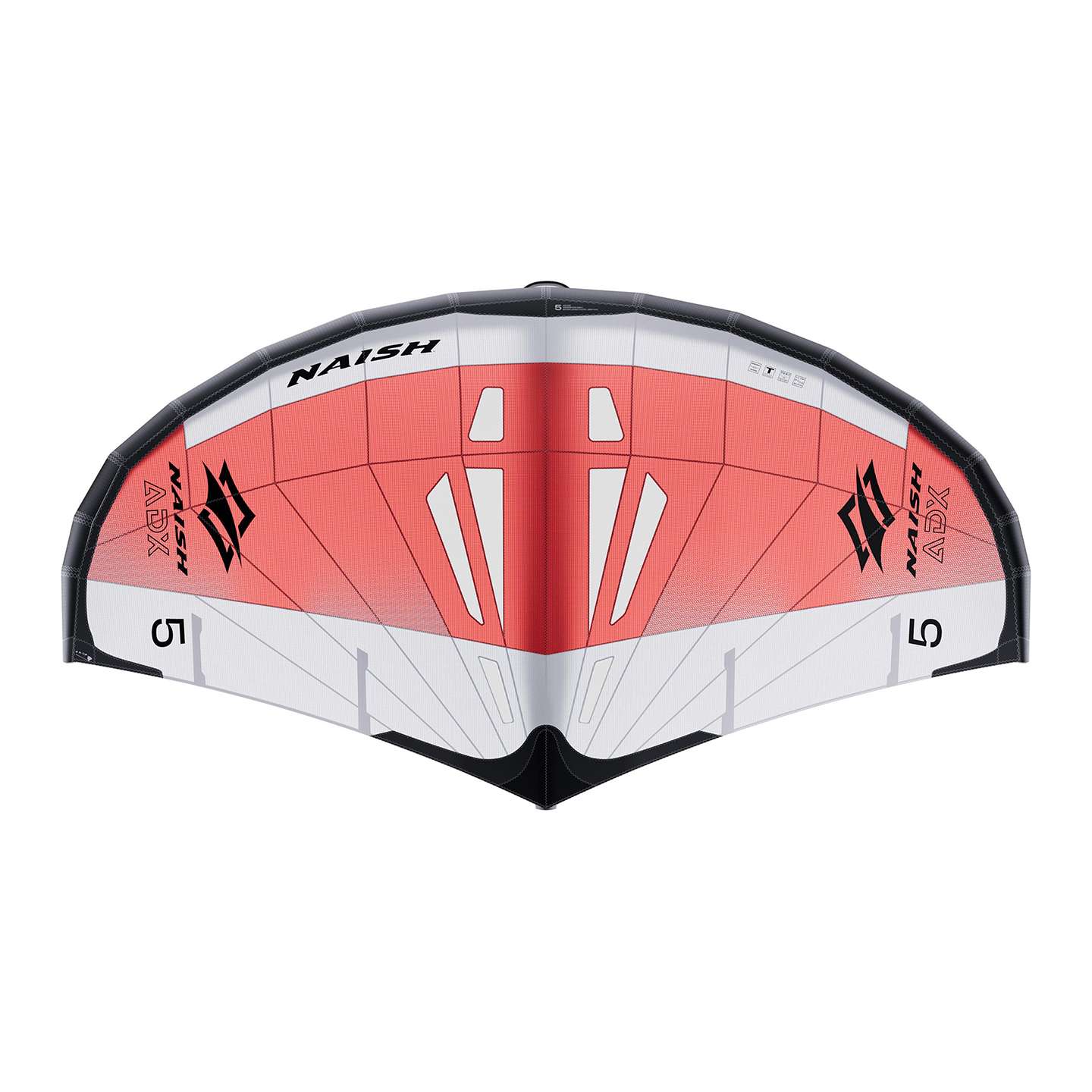
Then there’s the newest arrival — the parawing. Compact, ultra-light and designed for hands-free downwinding, it bridges the gap between kiting, winging and paddle foiling.
The idea is simple: use the parawing to pull yourself upwind, then pack it away and enjoy the downwind run without anything in your hands. It’s the best of both worlds — no vehicle logistics, no bulky wing blocking your view, and no compromise on the glide.
Right now, parawings are still in their early stages. They’re light single-skin kites with short lines (about a metre long) and a bar turned 90 degrees from a normal kite bar. They’re stable, packable and surprisingly powerful, but the wind range is still narrow — underpowered they stall, overpowered they get twitchy.
For intermediate and advanced riders, though, they’re a game-changer. Expect big improvements in design through 2025 as more brands refine the tech. The F-One Plume and K-Wing are early examples of what’s to come.
Choosing the Right Kit
Foils: No matter your discipline, you’ll want something with plenty of glide and a low stall speed. That usually means a high-aspect design (7 aspect ratio or higher). Larger foils are easier to pump and get back up on foil, but they can be slower than the swell meaning you will need to link the bumps coming from behind you. Smaller faster foils can be too quick for the swell meaning you will need to bump over the back of swell. to drop down the face or ride at angles to the swell. Part of the art of downwinding is choosing a foil that suits the conditions and your ability/fitness – You need a foil that will allow you to rest and glide between pumping.
The Axis ART Pro, F-One Seven Seas & Eagle X, Duotone Glide and Crest ranges are great example of a purpose-built downwind foil, offering endless glide and efficient pumping.

Boards: You will want to be comfortable on the board you are riding and in the worst case scenario of the wind/swell dropping you will need to be able to paddle it back to shore. This size may vary depending on how far out you are going but the further offshore you go the more volume you should take.
Paddles: For SUP downwinding, a strong, lightweight paddle that you are familiar with.
Parawing: Although this is a downwind discipline in its own right it is also a great piece of safety equipment to take for any other downwind discipline. If you snap a paddle, puncture a wing or fall on a prone run then a small back pack with a parawing is going to help you get back to shore even if it is non foiling. They are also bright and fly above you making you easier to see.
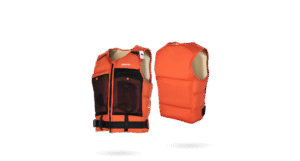
Floatation: A bright and easy to see life jacket.
Safety and Planning
The further you go offshore, the more self-reliant you need to be. Here are a few golden rules before heading out:
-
Carry communication: a waterproof radio, phone or smartwatch with data.
-
Wear bright gear: a high-vis vest buoyancy aid or hat makes you easier to spot.
-
Use a good leash: your board is your lifeline.
-
Plan your route: know the tide direction, wind forecast and exit points.
- Tell someone ashore your plan: Let someone know your route and timings.
Not going further out than you are prepared to swim is a good rule when starting out. As you get more experienced I’m sure this rule will not last but you will gain the knowledge and experience in how to deal with situations further out to sea.
When you’re downwinding, small differences in tide and wind can make or break your session. Always double-check that both are working with you — or at least not against you.
How to Get Started
Start small. You don’t need big swell or strong wind — in fact, light to moderate days are best for learning. Practice building speed, getting on foil early, and linking swells.
If you’re winging, learn to flag out and ride swells without power. If you’re paddling, focus on reading bumps and keeping momentum between them. Every session builds ocean awareness, balance and foil control — skills that’ll pay off when you take on longer runs.
The progression into downwinding will vary depending on their skill set and there is no right way. Its more about building confidence, so knowing you kit and how the water moves in your location are the two key ingredients.
The two skills that unlocking longer downwind rides are Bump Reading and Pumping The Foil. By riding lines of swell and looking for the next line to ride you will efficiently foil downwind but to link those lines you will need to pump efficiently which involves good timing and staying high on the mast.
The Future of Downwinding
Downwind foiling isn’t a fad — it’s the future. Every season brings new foils, lighter boards, and smarter designs. Parawings are still in their infancy, but they’re already opening doors for riders who want the simplicity of SUP downwinding without the heavy physical entry barrier.
Whether you’re paddling, winging, prone or experimenting with a parawing, downwinding is the most immersive and addictive way to connect with the ocean. It’s freedom, flow, and challenge all rolled into one.
Ready to Glide?
If you’re thinking about getting into downwind foiling you will no doubt already be foiling in some capacity. This means you can start working on your downwind skills (pumping and bump reading) on whatever setup you are already comfortable on. Start small and glide as far as you can with out any help from a wing, parawing or paddle | try to link two or more bumps | pumpfoil as far as you can. Linking all these skills is going to start getting you further and as you feel more comfortable and relaxed you will start opening the doors to endless glides